Back to Blogs
The Architecture of Trusted AI

You wouldn’t take a company public without an audit. You wouldn’t release a drug without substantial testing. So why are we comfortable shipping AI systems — into our banks, our courts, our hospitals, our defense platforms — without the same kind of evaluation?
That’s the question we should be asking right now. Not whether the models are bigger. Not whether the benchmarks are higher. But whether we can show our work.
The stakes are no longer theoretical. AI is making decisions where outputs carry legal, financial, or catastrophic weight. From AI approving a loan to surfacing intelligence for a national security analyst, AI is operating in environments where no human can intervene in time. These are not chatbots. These are systems whose decisions create downstream effects that cannot be reversed.
For deployments like these, performance is not the bar. Verifiability is.
Trust is built, not claimed
Trusted AI is the right frame for where this technology needs to go. The harder question — the one that often goes unanswered — is what it actually requires. Because trusted AI is not a label. It is a set of requirements with architectural implications. A chain, not a feature.
Trust requires transparency. You have to be able to see how a model reached its answer — not as a summary, not as a confidence score, but as a traceable path from input to output that a human can audit. If you can’t understand how the system got to its conclusion, you cannot trust the conclusion. That is true whether the decision is about a credit line or a kinetic strike.
Transparency enables governance. If you can see how the system works, you can put rules around it. You can approve it for one use case and restrict it from another. You can roll it back when something changes. Without transparency, governance is theater — a policy document with no mechanism to enforce it.
Governance requires measurement. Rules without measurement are aspirations. The system has to produce the telemetry that proves — quantitatively — that it is behaving the way it is supposed to. You cannot govern what you cannot measure, and you cannot measure what the system will not show you.
That chain — transparency, governance, measurement — is what separates AI you can deploy in a regulated industry from AI you can only deploy in a sandbox.
Where this matters most
The next wave of AI is not going to look like the last one. We are heading into an almost unlimited future — the combination of many different models and many agents built on those models, interacting at scale. That combinatorial expansion is where unexpected consequences will emerge if the right trust and governance aren’t built in from the start. The conversation today is dominated by a handful of very large general-purpose models. The conversation of tomorrow will look different. It will be about smaller, more specialized models — trained for a specific industry, a specific decision, a specific operating environment. And it will be about AI deployed increasingly at the edge, in settings where the assumption of human supervision begins to break down. AI used at the edge — deep space, undersea, the far side of the moon — will make sequenced decisions in real time, where the latency to a human reviewer is measured in hours, days, or never. These are not exotic edge cases. They are the architectures the next decade of AI deployment will run on.
In those environments, you cannot patch your way to trust after the fact. You cannot add explainability as a feature later in the roadmap. You have to design for it from the first principles of the system.
The organizations that figure this out will be the ones that get to operate in the markets that matter most — defense, intelligence, financial services, healthcare, critical infrastructure. The ones that don’t will spend the next decade getting blocked at procurement.
What we are building
At Seekr, we have spent years building what we believe is the most architecturally complete answer to the trusted AI question. SeekrFlow™ is the platform that lets organizations train, tune, evaluate, and govern AI with the audit trail intact. Thirty-five patents granted or pending. Three offices across the country. A team that has spent its careers in the environments where AI failure is not an inconvenience but a catastrophe — and where the standard for “good enough” is set by the consequences of getting it wrong, not by the performance of the last benchmark.
We did not build for benchmarks. We built for verifiability as the requirement, and trust as the outcome.
That is a deliberate bet, and it runs counter to a lot of the prevailing energy in the industry. The center of gravity in AI right now is speed, scale, and capability. Those are real and they matter. But they are not sufficient. A more powerful system that cannot be audited is not a better system for the use cases that matter most. It is a bigger liability.
The opportunity
The market is starting to catch up to the question. CIOs in regulated industries are being asked to defend their AI vendor choices. Boards are asking how AI exposure shows up on the risk register. Procurement officers are asking for evidence, not slides. The conversations I am in this year are categorically different from the ones I was in two years ago.
That is a good thing. Because if we get this right — if the bar for shipping AI starts to look like the bar for shipping a drug or taking a company public — we don’t slow the field down. We give it the foundation it needs to actually deliver on its promise. We get to deploy AI in the places it has been blocked from for the last decade, because the trust infrastructure was not there.
That is the bar Seekr is building to. And it is the bar everyone who depends on these systems deserves.
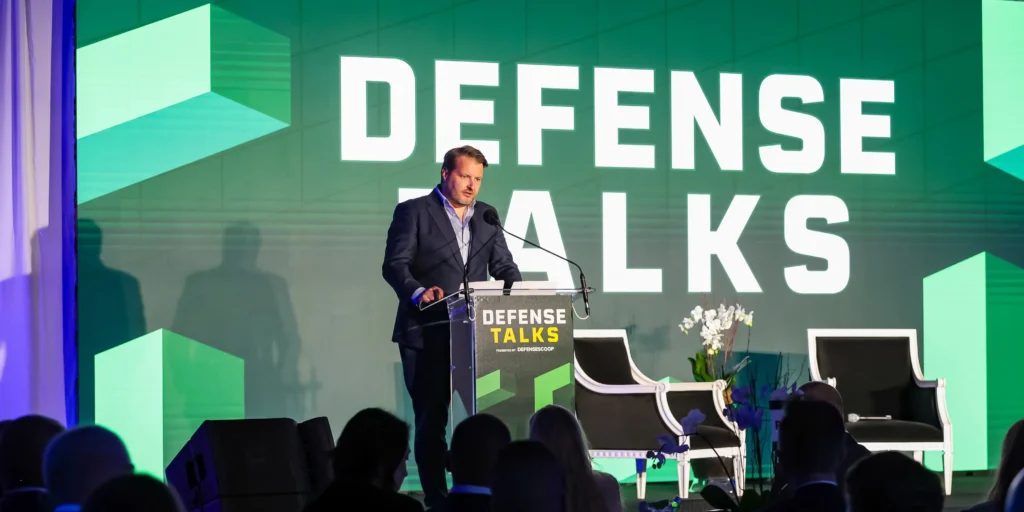
Pat Condo is the Chairman and CEO of Seekr Technologies. He recently spoke about trusted AI on Fox Business’ Mornings with Maria. Watch the segment here.
Book a consultation with an AI expert
We’re here to discuss your priorities and challenges, walk through a live demo, and explore how Seekr can help.
Let’s connect


Accelerate your path to AI impact
Book a consultation with an AI expert. We’re here to help you speed up your time to AI ROI.
Request a demo