Back to Blogs
What It Takes to Turn a Decades-Old Document Archive into a Live Queryable Asset
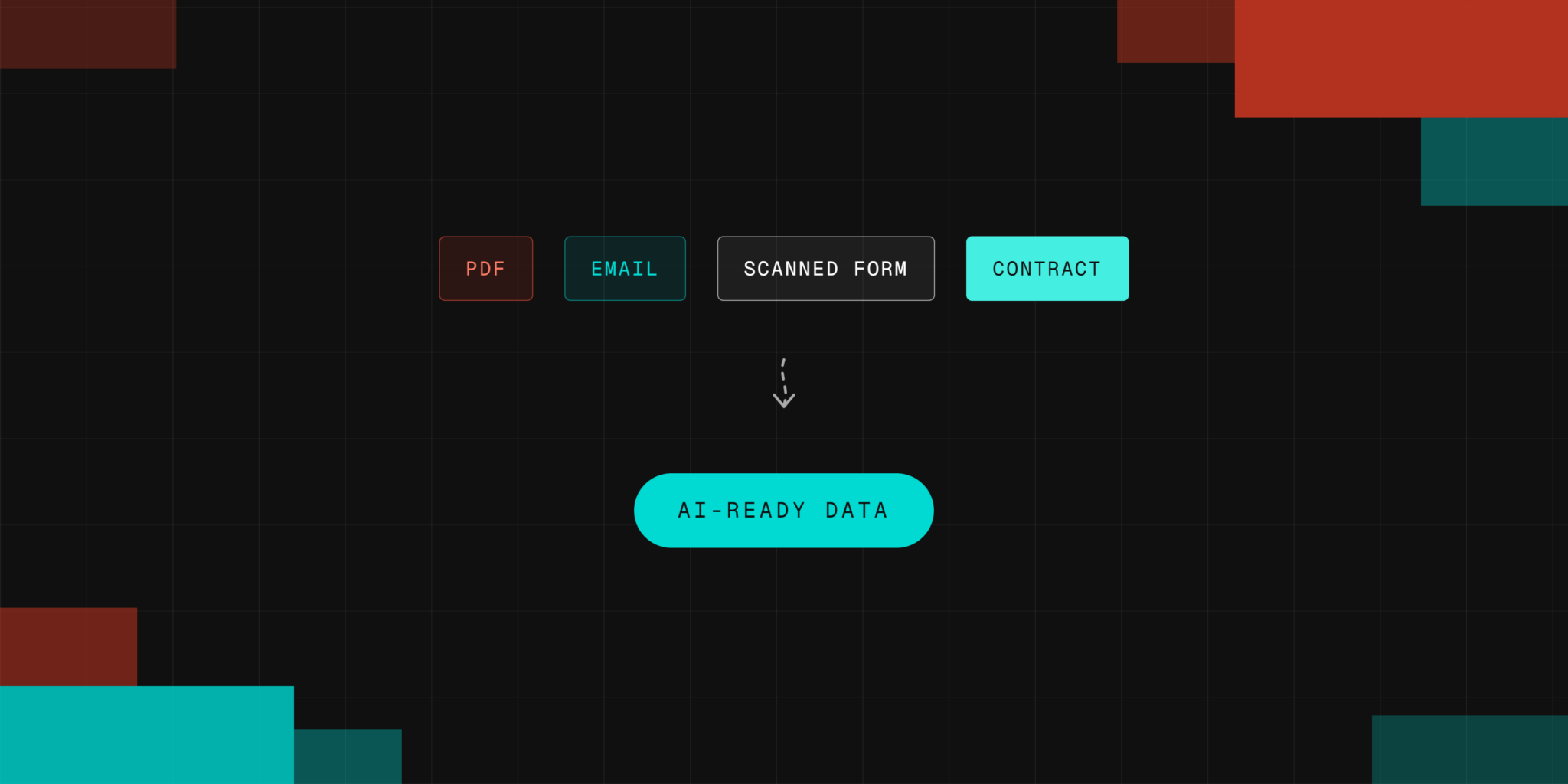

An implementation-level view of AI-ready data, drawn from a recent enterprise deployment
Every large enterprise has one. A shared drive, a document management system, a records archive. Somewhere in the organization sits a mountain of PDFs, contracts, policies, technical specifications, and correspondence that accumulated over years. These documents represent most of what the business actually knows about how it operates.
And almost none of it is queryable.
That gap between having documents and having data is where most enterprise AI programs collide with production. The demos work, and the pilots produce interesting numbers. But when the team tries to embed the AI into a live business process that has to run every day, on current data, with outputs that finance or operations or legal can act on, the pipeline breaks. Not because the model failed, but because the inputs were never production-ready in the first place.
But this gap can be closed. A recent Seekr deployment at a Fortune 500 provider of secure logistics and cash management services converted more than 7,000 customer contracts dating back to the 1990s into structured, queryable data and connected that data to the operational systems where decisions get made. The pattern behind their deployment repeats across virtually every large enterprise sitting on a legacy document corpus.
What “AI-ready” actually means
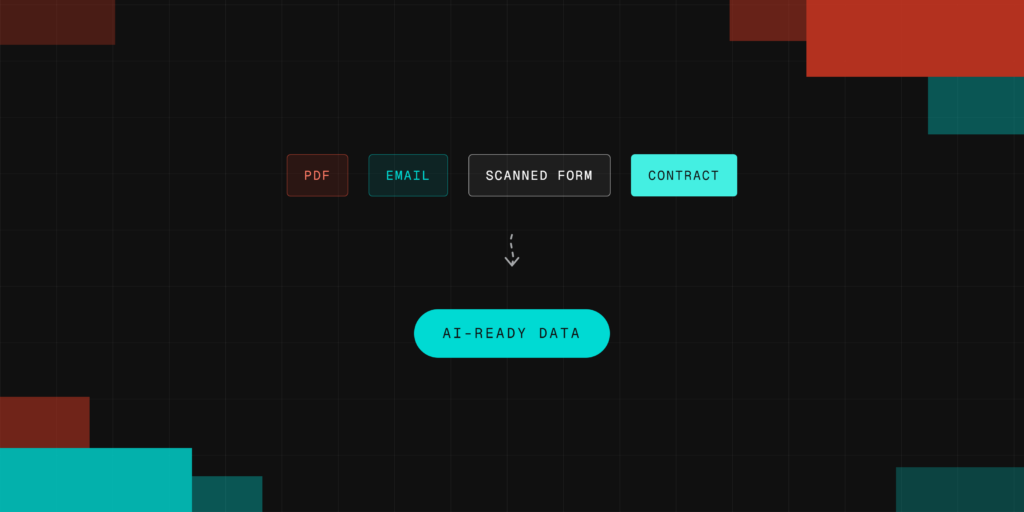
Gartner’s definition of AI-ready data is that it is aligned to use cases, actively governed at the asset level, supported by automated pipelines with quality gates, managed through live metadata, and continuously quality-assured.
That’s directionally right, butit doesn’t tell you what to build. In practice, taking a legacy document archive to AI-ready state means answering four questions about the corpus:
1. What’s the schema?
Before any extraction runs, someone has to decide what structured fields the documents are supposed to produce. For a contracts, that means figuring out which terms actually matter to downstream systems—pricing, service frequency, escalation clauses, renewal dates, change order history, location identifiers, party names—and what schema they need to land in to be joinable with the rest of the enterprise’s data.
This sounds obvious, but it’s the step most projects skip. Teams start extracting fields opportunistically (“Let’s see what we can pull!”) and end up with a semi-structured mess that no downstream system can consume. The schema decision has to be made first, in conjunction with whoever owns the systems the structured data has to plug into.
2. How does explainability get preserved?
For any use case where the output has to be defended, like finance, compliance, legal, procurement, risk, every structured value must be traceable back to its source. Not “we found this pricing term somewhere in the contract,” the exact clause, the exact page, and the exact language.
This is a design decision, not a feature you add later. The extraction pipeline has to preserve provenance at every step, the storage schema has to have room for source references alongside structured values, and the user interface has to surface both. If explainability is bolted on after the fact, it never works cleanly.
3. How does the structured data get connected?
Structured contract data is not useful by itself. It becomes useful when it can be joined against the operational data that reflects what actually happened, like service records, invoices, customer master data, transaction logs. The join is where the value shows up.
In practice, this means the extraction pipeline has to produce output in a schema and format that lives natively in the same environment as the rest of the enterprise’s structured data. In our customer’s deployment, that meant landing everything in Snowflake alongside the service-level records the customer already maintained there. Whatever the enterprise’s data warehouse or lakehouse is, the AI-ready output has to end up there in a form that joins cleanly.
4. How does it stay current?
Document archives are not static. New documents get added, amendments get executed,and change orders modify terms. If the AI-ready pipeline is a one-time exercise, its outputs go stale within months and the business loses trust in them.
The pipeline has to run continuously. Every new document gets ingested, structured, and connected as it arrives. Every downstream analysis reflects the current state of the corpus. This is where a lot of pilots quietly die because they can produce a beautiful one-time report, but then no one funds the operational infrastructure to keep it live.
How it played out
The customer’s operational environment was modern and well-governed. Service records flowed cleanly into Snowflake. The contract environment was not. More than 7,000 customer contracts, some dating back to the 1990s, lived as PDFs in a document archive. The terms in those contracts — pricing, service frequency, escalation, change orders — governed what should have been happening operationally and financially. None of it was queryable at scale.
The scope of the initial deployment was specific: ingest the full contract corpus, extract the fields that mattered, land them in Snowflake alongside the service records, and make every value traceable back to its source clause.
The schema work happened first. Seekr worked with the customer’s data and commercial teams to define which contract fields needed to be structured and how they should map to the operational data model. Nothing got extracted until the schema was agreed on.
The extraction pipeline preserved provenance for every field. Every value in the structured output carried a pointer back to its source contract, page, and clause. When a discrepancy showed up in the joined view, the finance team could click through to the underlying language.
The join with Snowflake was where the value became visible. Once contract terms and service records lived in the same environment, previously invisible gaps between what was promised and what was delivered surfaced. The initial analysis identified a multi-million-dollar revenue recovery opportunity affecting approximately 5% of North American locations — squarely within the 2%–9% revenue leakage range that industry research documents for large enterprises with complex contract portfolios.
The pipeline is now moving from initial deployment to steady state. New contracts and amendments flow through the same extraction and structuring process. Discrepancy detection runs continuously. The commercial and finance teams have a view they have never had before.
What we learned
Three things worth naming for teams considering similar deployments.
Schema discipline pays for itself. The time spent up front on the schema — before any extraction — was the highest-leverage work in the project. Every hour there saved days of rework downstream. Teams that skip this step almost always regret it.
Explainability is not optional. For any use case where the output has to be defended — and in most enterprise applications, that includes essentially all of them — provenance has to be designed in from the start. It’s the difference between a system that produces recommendations and a system that produces actionable evidence.
The pipeline is the product. A one-time extraction is a data engineering exercise. A live pipeline that structures new documents as they arrive is what actually changes how the business operates. Pilots that stop at extraction produce reports. Pilots that go all the way through to operational integration produce recurring value.
Where this applies
The pattern is not specific to secure logistics or contract management.
Any large enterprise sitting on a legacy document archive — insurance policies, loan agreements, procurement contracts, clinical protocols, engineering specifications, regulatory filings — has some version of this problem. The archive holds terms that govern how the business operates. The operational systems don’t know what the terms say. The gap between the two is where value leaks, risk accumulates, and opportunities go missed.
Closing the gap is an implementation problem, and the four questions above are the ones worth answering first.
If your organization is early in an AI-ready data initiative, that framing might save you some time. If you’re deeper in and running into the pilot-to-production wall, it might tell you where to look.
Turn your data into AI-ready pipeline
Convert diverse data into AI‑ready intelligence with Seekr. Move beyond data prep bottlenecks. Transform diverse sources into AI‑ready formats that drive accuracy, lower costs, and accelerate deployment. Request a demo to see how SeekrFlow automates the process so you can start in days, not months.
Request a Demo