Back to Blogs
Where the Mission Lives
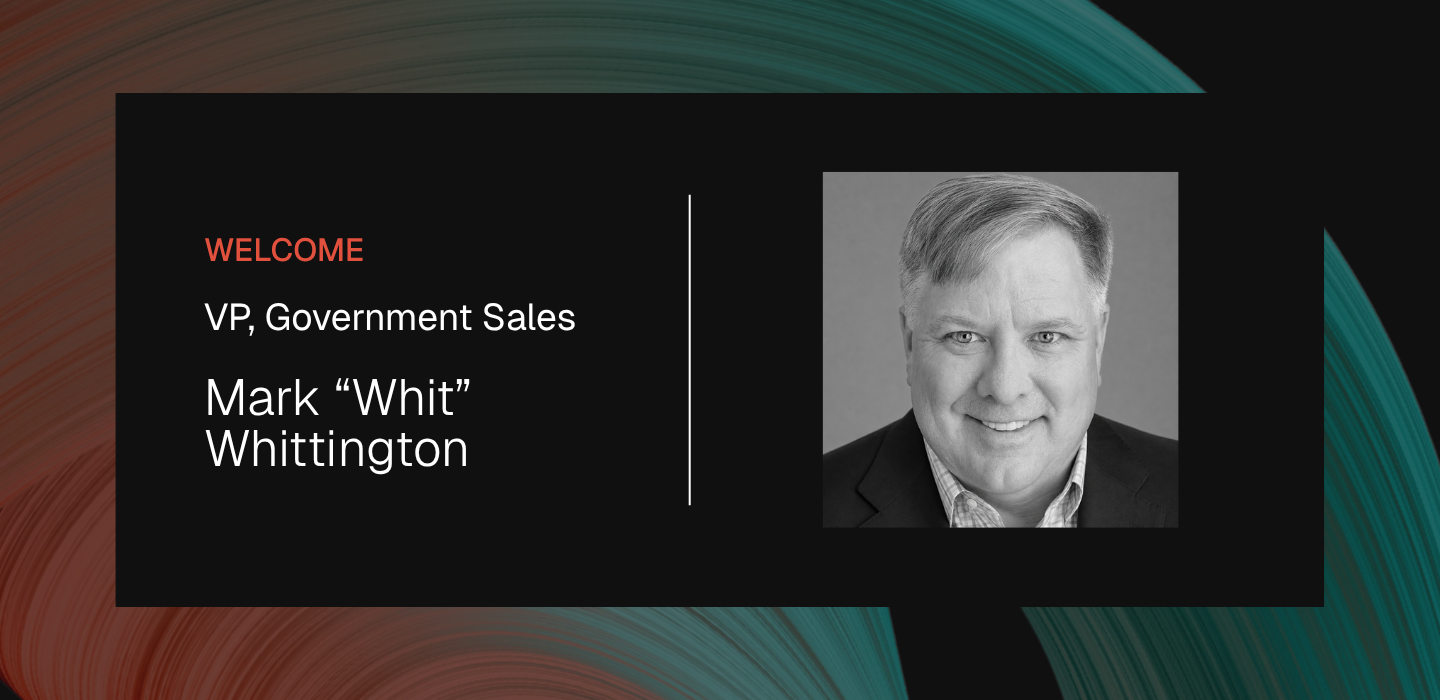

The seminal moment in my career journey happened 24 years ago. I was standing in my front yard in Arlington holding my then 4-month-old son Noah, looking south down North Florida Street and I could see the smoke from the Pentagon swirling into that crisp azure sky on 9/11. From that day on my life’s work has been focused on the promise of technology in the national security mission of government. It has been my honor and privilege to work side by side the men and women who keep us safe and build teams that have delivered multiple mission-critical solutions that help protect our nation today.
I have always been drawn to the public sector mission. My grandfather was the Chief of Police in Frederick, Maryland for over 25 years. His amazing style and passion for his town, his officers, and the safety of the community left an indelible mark on me that I draw from every day. I am humbled that I have such amazing customers to work with. There is something so special about the people who choose to serve their country and community. The person whose job is to make a decision under pressure, with consequences, on behalf of something larger than themselves. Ensuring a first responder has the right information and situational awareness as they rush into a community during a hurricane. A program officer making a procurement call that determines whether a capability reaches the field. An emergency dispatcher routing units to a scene that doesn’t have ten minutes to wait. A defense analyst recommending an action that other people will have to execute under fire.
Every job I’ve taken since – Oracle, Microsoft, SAP, AWS, Slack – has been an attempt to close the distance between those amazing people, their missions and the technology that’s supposed to help them. At Microsoft, the work was helping build the newly formed Department of Homeland Security and then taking that value to the worldwide public safety and homeland security community. At SAP, it was bringing enterprise-grade architecture to federal and aerospace and defense customers and partners. At AWS, it was ensuring there was a mission-ready ecosystem of public sector partners leveraging that incredibly powerful platform. At Slack, it was bringing a transformative, modern collaboration platform to bear on incredible missions like forecasting the weather, helping emergency responders communicate, and helping veterans get to key services.
The story across all of it is the same.
The commercial market keeps building powerful new technology. The public-sector mission keeps asking the same question: can I deploy it where my work actually happens, with my data under my control, in a way I can explain and defend when someone asks me to?
For most of those 24 years, the honest answer was: not quite, not yet, almost.
AI is the first technology I’ve watched go from “almost” to “this is now” inside a 24-month window. It is all happening faster than ever.
The frontier labs are doing serious work. The capability is real. So is the gap between what a model can do in a benchmark and what an agency or a critical infrastructure operator can actually put into production. That gap isn’t a marketing problem. It’s an architectural one. It’s the difference between AI that’s powerful and AI you can deploy in an environment where the consequences of being wrong are someone else’s day, mission, or life.
That’s where Seekr lives.
I came for three reasons.
One – the platform is built for the operator, not the demo. SeekrFlow deploys where the work happens. Cloud. On-premises. Sovereign. Edge. The air-gapped environments where the mission actually operates. The data stays where it belongs. The model is trained and fine-tuned on the customer’s data and only the customer’s data, governed by the customer’s policies. None of that is a roadmap; it’s how the platform is architected today. Anyone who has tried to bring commercial AI into a regulated, security-sensitive, or sovereign environment understands how rare that combination is.
Two – explainability is real. I’ve watched “explainable AI” become a phrase that means whatever the salesperson needs it to mean in a given quarter. Most of what gets called explainable today is a log of what the agent did, not why. Seekr’s architecture lets you trace a specific decision back through the reasoning, the retrieved data, and the model components that produced it – not as a feature bolted on later, but as a property of how the platform was built. If you’ve ever sat across from a compliance officer, a contracting officer, or an inspector general and tried to defend an automated decision with a paragraph from a vendor brochure, you understand the difference.
Three – the team and the timing. Pat Condo has built six companies; two of them cleared a billion on NASDAQ. Rob Clark and Lloyd Cope are operating leaders of a caliber you don’t find together often. The investor backing from AMD Ventures and Danu Venture Group signals where the most disciplined capital sees the next decade of AI value going – into deployments that have to work in environments where the demo can’t help you. And the customer base already includes the kinds of organizations that don’t choose AI vendors casually. I had many options and I chose Seekr.
The regulatory floor is rising under the entire industry – federal AI mandates, the EU AI Act, sector-specific frameworks for finance, health, and critical infrastructure. None of those frameworks were written for “trust us” answers. The next phase of AI in the public sector and critical infrastructure won’t be won on the most impressive demo. It will be won on which platforms can clear the gates that the mission, the lawyer, the auditor, and the IG all need cleared.
That’s a fight I’ve wanted to be on the right side of for a long time.
I’ve spent 24 years trying to bring commercial-grade technology into rooms where the consequences are real. Seekr is the first AI company I’ve evaluated and concluded was actually built for those rooms – not adapted to them after the fact.
Glad to be here.
Accelerate your path to AI impact
Book a consultation with an AI expert. We’re here to help you speed up your time to AI ROI.
Request a demo