Back to Blogs
The Other Frontier

The two most valuable AI companies in the world are racing toward the same finish line.
OpenAI raised $122 billion last month. Anthropic is reportedly weighing a public listing. Google, Microsoft, Meta, and a handful of frontier labs are spending more on training compute every quarter than most countries spend on national defense. The race to AGI is the largest concentration of capital and talent ever deployed against a single technical problem in history.
And every quarter, the gap between what those models can do and what the people using them can actually verify gets wider.
The 2026 International AI Safety Report puts it plainly: capability is advancing faster than oversight, faster than evaluation, and faster than the tools needed to know whether an AI system is doing what its operator believes it is doing. Prompt injection success rates remain meaningful across major releases. Agent connections to enterprise systems — email, code repositories, internal knowledge bases — are described in the security literature as privileged integrations that need to be governed like any other. Microsoft just launched a $99-per-seat enterprise SKU whose entire premise is that AI agents now require a control plane.
None of this is a knock on the frontier labs. The work is real, the engineering is unprecedented, and the safety teams are serious. The problem is structural: the customer who needs AI most — the federal program officer, the enterprise CIO, the CFO, the agency analyst, the hospital administrator — is operating at a different altitude than the lab racing to AGI. Their question isn’t whether the model can pass the bar exam. Their question is whether they can defend the decision the model just helped them make — to regulators, boards, the public, and to themselves.
That’s the frontier they actually live on. And it isn’t being well served.
The buyers I’ve spent my career working alongside want three things from AI that the current frontier conversation rarely addresses head-on.
- They want to deploy wherever the work happens. The public cloud is fine for some workloads. It’s a non-starter for others. A defense agency doesn’t move classified data to a third-party API. A hospital can’t put PHI in a sandbox it doesn’t control. A bank’s compliance team doesn’t accept “trust us” as a residency answer. AI has to come to where the data and the mission already live — cloud, on-premises, sovereign, edge, SCIF — not the other way around.
- They want to keep their data. Not a copy. Not a synthetic representation. The original. They want the model trained on their data and only their data, running on their compute, governed by their policies. The next decade of AI economic value sits inside the proprietary data that enterprises and agencies have spent decades accumulating. Anyone who wants to extract value from it without solving the question of who else gets to see it is going to lose that conversation, and lose it badly.
- They want explanations they can actually defend. This is where the current vocabulary has gotten sloppy. “Explainable AI” gets used today to describe a wide spectrum of capabilities — from agent activity logs (which tell you what the model did, not why) to fine-tuning provenance (which tells you what data the model saw, but not what it weighted) to true architectural traceability — the ability to point at a specific decision and walk all the way back through the reasoning, the data, and the weights that produced it. Most “explainable AI” stories in the market today stop at the first or second layer. The buyer accountable for the decision needs the third.
The timing on all of this isn’t subtle. Federal agencies are operating under OMB M-25-21, which requires Chief AI Officers and certified high-impact AI inventories. The EU AI Act’s commercial compliance deadline is months away and the board-level conversations have already started. Supply chain risk questions, program of record designations, the wave of new presidential directives on AI use across the federal government — every month, the regulatory and procurement floor for AI in critical infrastructure rises another foot.
The companies that figure out how to operate above that floor will define the next decade of enterprise and government AI. The ones still selling capability without accountability are going to find themselves quoted in case studies they didn’t ask to be in.
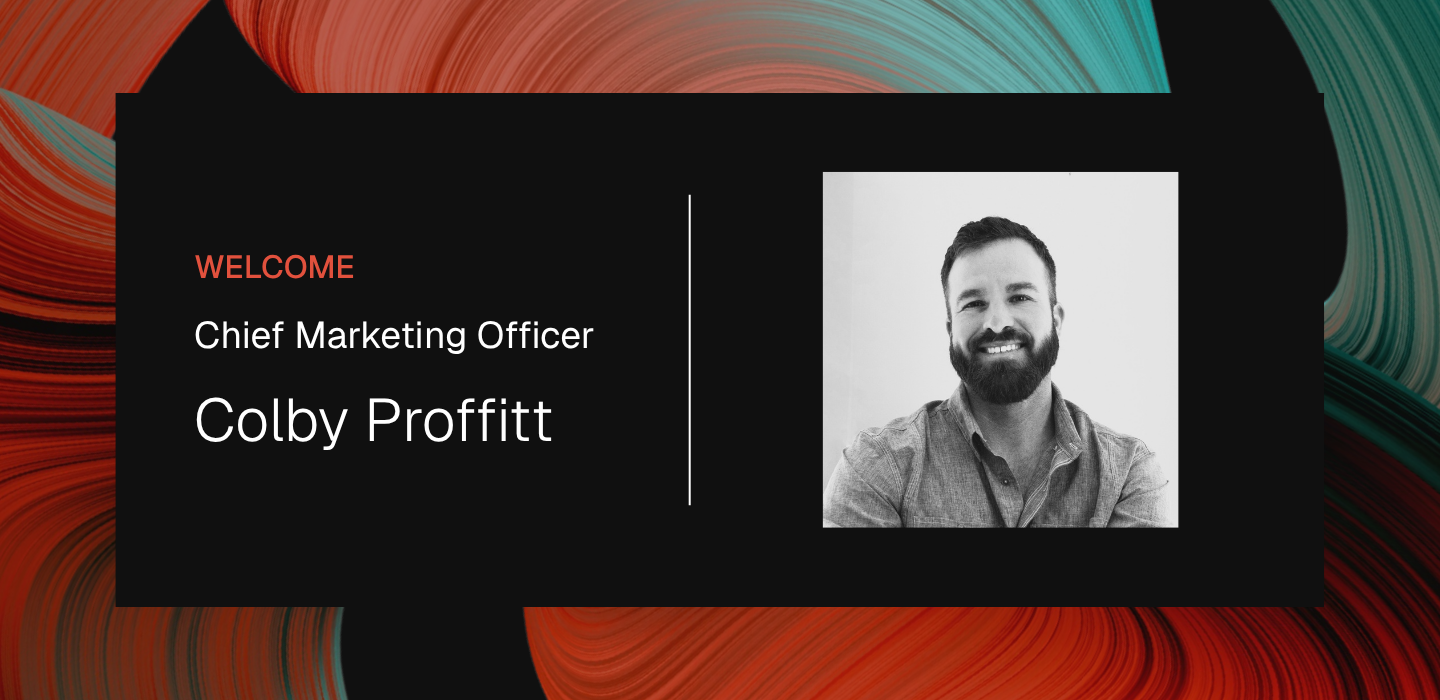
This is why I joined Seekr.
I’ve spent my career marketing technology in markets where the stakes are real — defense, critical infrastructure, public safety, and highly regulated commercial sectors. The reason I keep ending up in those rooms is a conviction that the most important work in technology is being done by the companies whose products get used when something is actually on the line. That isn’t a romantic position; it’s an operating discipline.
Seekr is one of the very few AI companies I’ve looked at and concluded is solving the actual problem the buyer has. Not the problem the frontier conversation thinks the buyer has —the actual one. SeekrFlow deploys where the work is. The data stays where it belongs. And the explainability isn’t a log of what an agent did after the fact — it’s an architectural property of how the platform is built, traceable from the answer the user sees all the way back through the reasoning, the data, and the model that produced it.
That’s a real product, solving a real problem, for some of the most demanding buyers on the planet. The team building it has the technical depth, the leadership credibility, and the investor backing to scale what they’ve built into the category-defining position the market is ready to reward.
I don’t put my name on a brand lightly. Names matter — particularly in industries where trust is the product. The decision to join a company is, for me, a question of whether the work being done is the work worth doing.
At Seekr, the answer was easy.
There’s a wave of customer, partner, and product news about to land. More to come.
Read the full press release HERE.


Accelerate your path to AI impact
Book a consultation with an AI expert. We’re here to help you speed up your time to AI ROI.
Request a demo