Back to Blogs
The AI Checkride: 5 Takeaways from DefenseTalks 2026

Before being cleared to fly, every pilot is required to prove their capability with a flight test known as a ‘checkride.’ The checkride tests them under pressure, in real conditions, to determine if they can be trusted to fly the aircraft. We don’t grant trust to a pilot if they haven’t passed a checkride, but we are not currently exercising the same degree of caution with AI systems in defense and intelligence workflows.
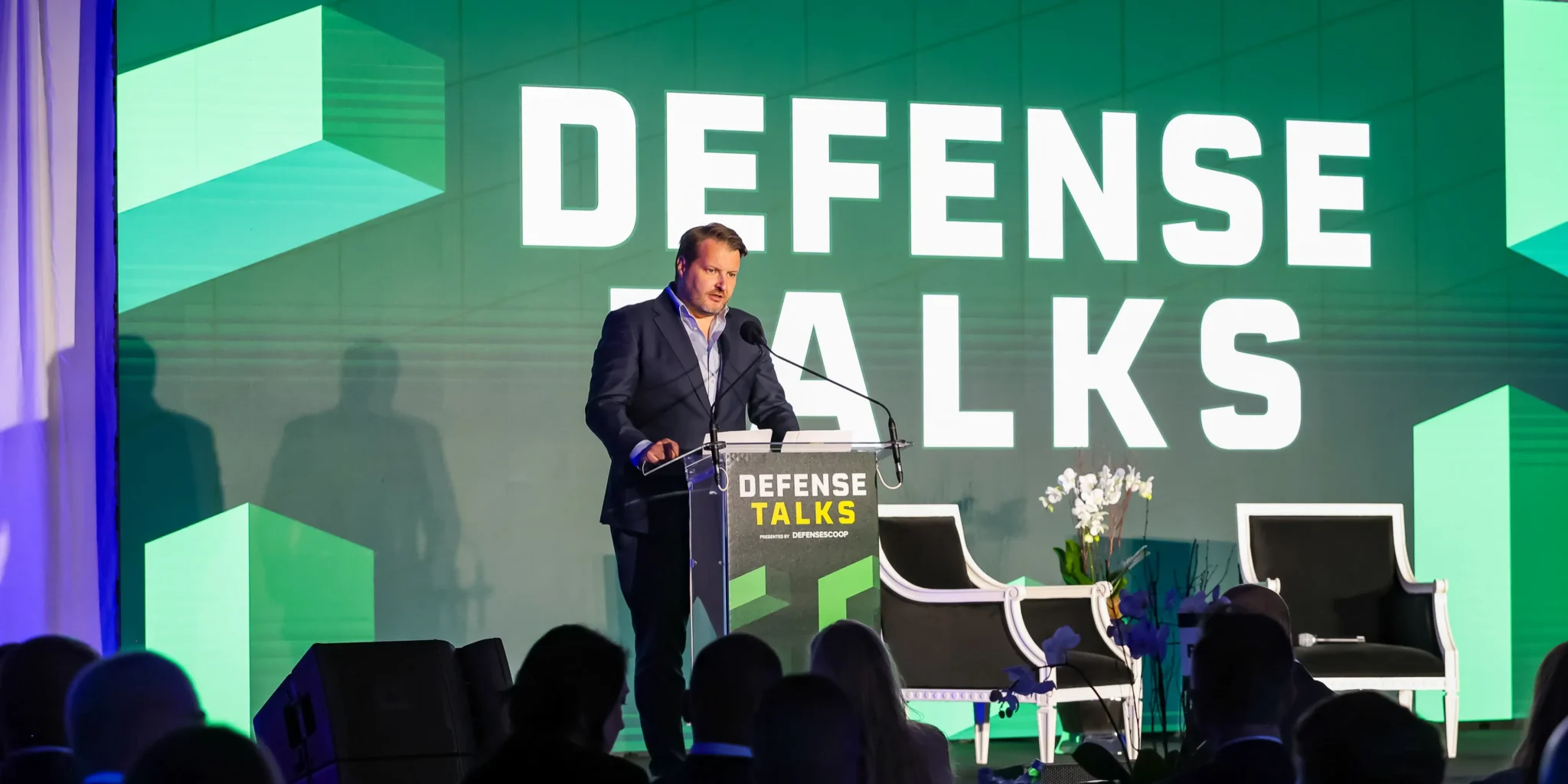
That gap was the focus of Seekr President Rob Clark’s talk, “Trust Your Wingman: Validate AI for the Mission,” at the latest DefenseTalks event by DefenseScoop on Tuesday, September 22nd. His argument was clear. If America wants to lead in AI, warfighters need AI they can trust in the field. That trust has to come from tools you can test, measure, and prove.
Here are five takeaways for defense and intelligence leaders.
1. AI is proliferating exponentially, and making its way into Defense and Intelligence applications
Hugging Face now hosts nearly 3M public models, up from 2.43M in January 2026. That’s one public source of open-weight models. It doesn’t count closed models from major providers, cloud platforms, or government networks like GenAI.mil.
Public registries are also an attack surface. JFrog researchers found 495 malicious models on Hugging Face. They also found that 53% of organizations self-host models from sources where malicious payloads have been detected. Software shows where this trend leads. Sonatype identified more than 450K malicious open-source packages in 2025.
Adversaries can seed registries with misaligned, poisoned, or backdoored models. One wrong download can carry that risk into a mission system. Rob framed the problem as an equation: (Models + Agents + Laws) – The Right Tools = Chaos.
2. Trust comes from systems you can test
Every high-consequence network runs on engineered trust. SWIFT moves money across borders. National Highway Traffic Safety Administration standards put seatbelts and airbags in new cars. The FDA reviews drugs before they reach patients. Checkrides prove a pilot can handle the aircraft and the mission.
Each of these is a working system with tools and tests behind it. AI has no equivalent yet. We’re fielding AI with more autonomy, speed, and consequence than almost any technology before it. In many cases, it skips the checkride.
3. Treat trust as an engineering problem
The Government Accountability Office identified 94 government-wide AI-related requirements for federal agencies, drawn from federal laws, executive orders, and guidance. States add more. In 2025, state lawmakers introduced 1,208 AI-related bills and enacted 145 of them, according to MultiState.
The solution is not more legislation, policies, or frameworks.
Rob argued that more rules won’t close the gap. What’s missing is access to the right systems and tools.
Some groups treat AI trust as a philosophical question, centered on ethics, morality, and responsibility. Leaders treat AI trust as an engineering and enablement problem. Their focus is building and using the systems that let the nation move faster while staying in control.
4. Explainability accelerates the mission
In ethics debates, explainability can sound like a brake. Rob described it as a toolset for speed. For the warfighter, explainability means:
- Tools that prove a model or agent works the way its designers intended
- Models built with operator knowledge and mission-specific reasoning, so they can explain why they produced a result
- Cyber protections against manipulation of running models and agents
- Secure handling of high-side data within its network and required controls
He compared it to pilot training. A combat aviator specializes in their weapon system, not a Boeing 737. Your AI should specialize in your mission, too.
5. Every mission-critical AI deployment must answer four questions
Rob closed with four questions most deployments can’t answer today:
- Provenance: Did the model use the right information?
- Explainability: Can you understand why it produced this result?
- Contestability: Can you challenge or override the result?
- Agent control: Did it act within its authorized boundaries?
Smaller, task-focused models make these questions easier to answer. They offer a smaller attack surface and less room for adversaries to hide backdoors. They also deploy where operators need them, including degraded and contested environments. Autonomous systems need validation that runs at the same pace they do.
It’s time for the AI checkride
We built SeekrGuard to give your teams that checkride. It tests model and agent behavior against real mission conditions. Generic data and benchmarks like grade-school math and world history facts can’t tell you whether a model will hold up in the field when you need it most.
We designed SeekrGuard to run across any platform, model, or chip. With it, you can choose the right model and size for your environment. You can train mission-specific reasoning on your agency’s own knowledge, including classified data. You can back every decision with evidence.
You don’t field a weapons platform until you prove it works. Hold your AI to the same standard.
See how SeekrGuard validates AI for your mission →

Accelerate your path to AI impact
Book a consultation with an AI expert. We’re here to help you speed up your time to AI ROI.
Request a demo